

N3MO
Developer toolsAutomated PR Review — Know What Breaks Before You Push
Unclaimed listing
Found via hacker-news ↗
Unclaimed listing
Sign in to claimClaim N3MO
Verify ownership to edit this listing, publish updates, access analytics, and use launch tools.
What it does
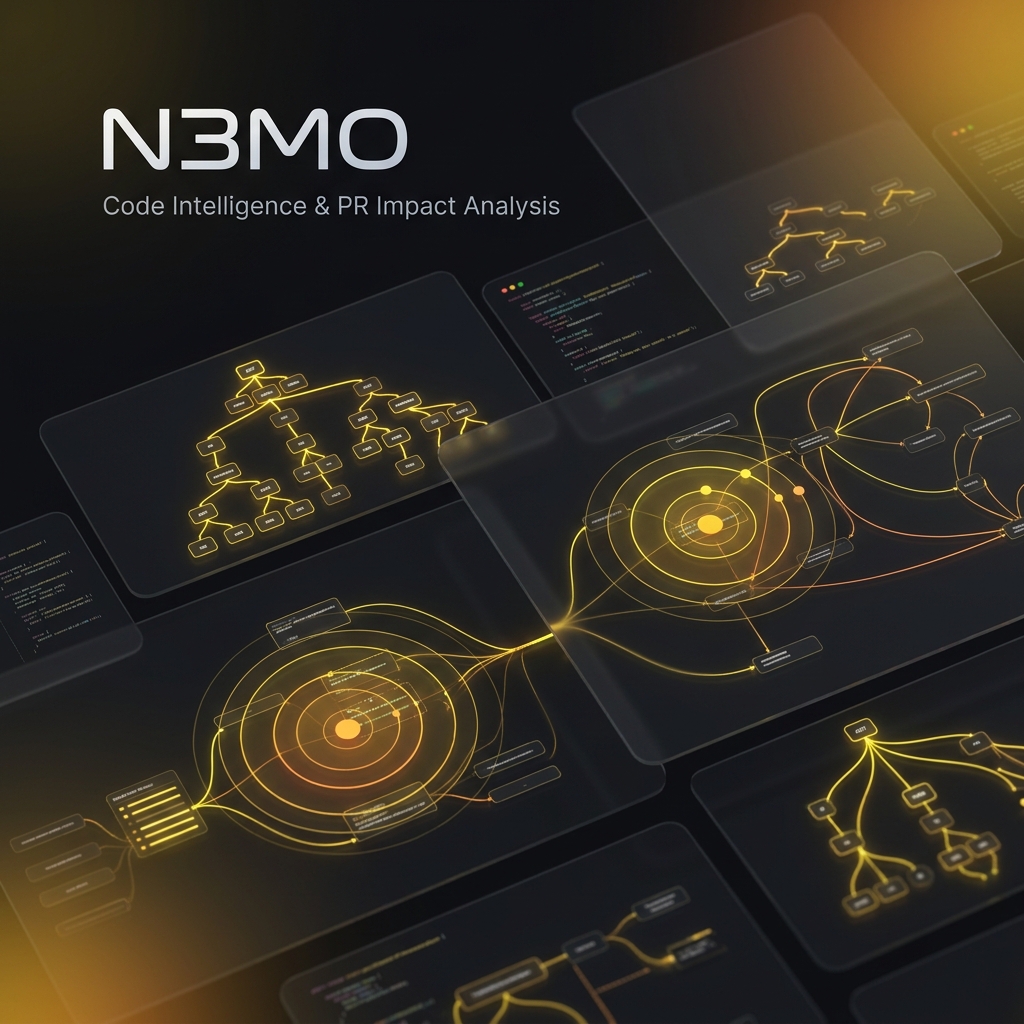
N3MO is an automated pull request review and code impact analysis tool that maps code dependencies and calculates the transitive “blast radius” of every change before you merge. It parses your repository’s ASTs, builds a call graph, and traces downstream callers so reviewers can see what a refactor, deletion, or API change could break—without relying only on manual intuition or grep.
For staff engineers and architects working in large or legacy codebases, N3MO provides a dependency knowledge graph to navigate sprawling relationships across services and layers. For senior developers acting as PR gatekeepers, it generates deterministic impact analysis to support safer reviews. For AI coding agents (and the developers using them), N3MO offers an MCP (Model Context Protocol) server so tools like Cursor, Claude Desktop, or Windsurf can query real structural relationships instead of guessing file structure.
Core workflow starts with indexing your repository. Locally, you can install the CLI via pip, run setup to start the PostgreSQL container, index the workspace, and run impact queries (including launching an interactive graph in a local browser). In GitHub, N3MO can be connected via webhook so that on every pull request it parses the code, computes the impact chain, and posts a markdown report as a PR comment. The report highlights affected files, transitive callers, and an overall severity/impact signal so teams can catch risky changes early.
Key capabilities include transitive blast radius tracing to arbitrary depth, scope-aware symbol resolution, and language parsing support for 27 languages via Tree-sitter (with deep semantic call graph mapping optimized for Python, JS/TS, and Java). N3MO also includes repository-based pricing (not seat-based), plus options for enterprise security and governance such as zero stored source code for SaaS (structural metadata only) and zero-trust deployments where the CLI runs inside private, air-gapped CI/CD pipelines so code never leaves your VPC.
Launch details
Built for the work
Categories
Developer toolsdeveloper-toolsai-agentsproductivity

Community
Discussion
No comments yet. Start the conversation.